
Programmatic SEO risk checklist for UAE search-layer planning
What this page covers
Programmatic SEO risk checklist for UAE search-layer planning
Use this checklist before scaling programmatic SEO pages across UAE services, industries, roles, or locations. It helps keep the search layer structured, useful, and easier to maintain.
SEO/GEO Community UAE focuses on how Google and AI-powered search read website structure, hubs, leaves, indexing paths, sitemap quality, weak entry points, and content risk.
In brief
- Check that every planned page connects to real UAE search demand, not just a repeated service, industry, role, or location combination.
- Review templates for thin content, duplicated sections, doorway-style intent, and weak differentiation across similar URLs before publishing at scale.
- Use a structure scan to see visible pages, hubs, blocked discovery paths, sitemap or robots issues, and the fixes to prioritise first.
What to do
A safer programmatic SEO plan starts with demand mapping. In the UAE, this can include Dubai, Abu Dhabi, Sharjah, free zones, and sectors such as B2B services, real estate, clinics, SaaS, ecommerce, education, logistics, law firms, and agencies.
The checklist should test the architecture before production. Confirm that hubs and leaves have a clear role, internal links support discovery, sitemaps match the structure, and each template has enough evidence-backed variation to avoid thin or repetitive pages.
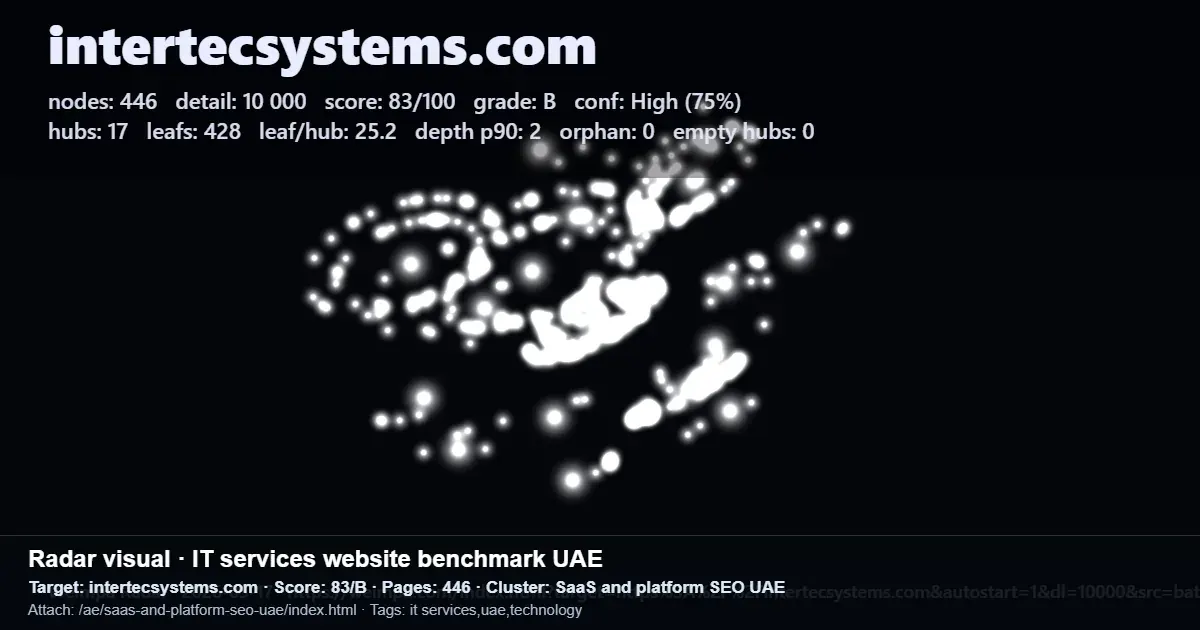
Radar is the first diagnostic layer. It checks how a public website is structured, which pages and hubs are visible, where discovery is blocked, and what should be fixed first. When a structural gap is found, 1000&1 Pages can support demand mapping, hub and leaf planning, evidence-backed pages, internal linking, deployment, sitemap submission, and growth monitoring.
What to keep in mind
This page is most useful for teams planning many SEO pages around combinations of services, industries, roles, or UAE locations. It also helps when large-scale publishing may become hard to monitor and maintain over time.
It is not a reason to publish every possible page variation. If a page has no clear demand, distinct purpose, or useful content variation, the safer choice may be to merge it into a stronger hub or wait until the plan is clearer.
A practical risk review should cover technical structure as well as editorial quality. Check sitemap-first discovery, crawl fallback when sitemaps are missing or incomplete, visible hubs and leaves, weak spots, and access issues before expanding the search layer.