
Radar Scan vs Technical SEO Audit
What this page covers
Radar Scan vs Technical SEO Audit
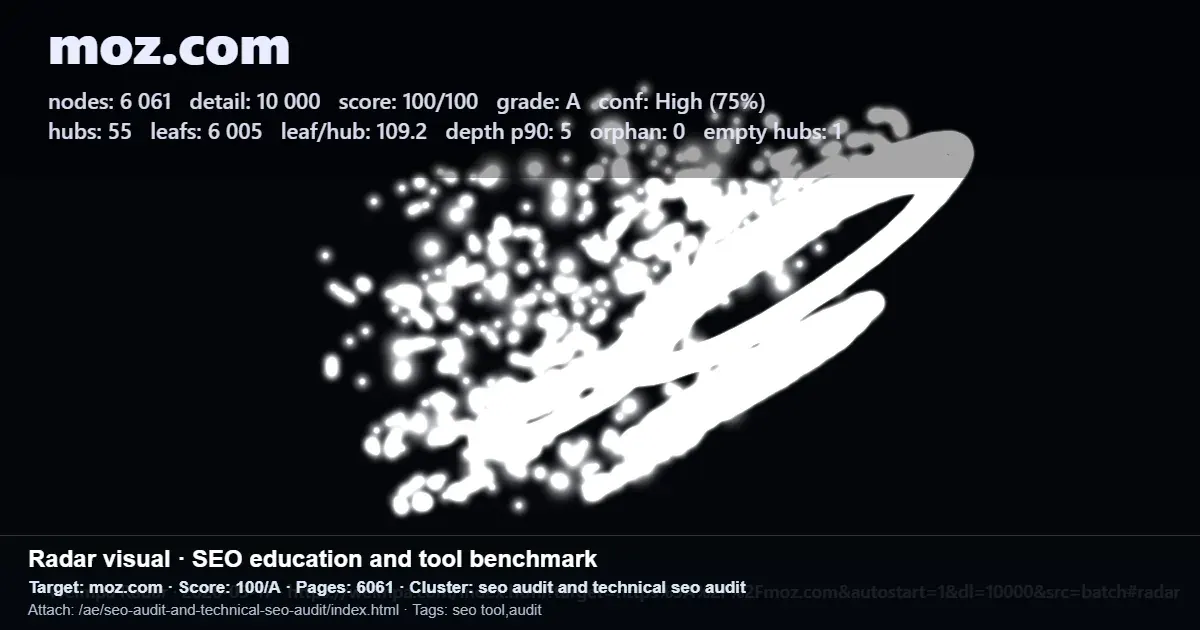
Radar Scan is the lighter option when you want a quick visual view of site structure, scan findings, and what to fix before running another scan.
A technical SEO audit is the broader diagnostic option when you need a more structured review of technical health, blockers, and priorities before a larger SEO project.
In brief
- Choose Radar Scan when you want a graph-level view of site structure, hubs, leaves, and coverage patterns that are easier to review and explain.
- Choose a technical SEO audit when you need a neutral, structured diagnosis to assess technical health and identify the blockers to fix first.
- They can work well together: scan the site, review findings, fix issues, and rescan to see whether structure and discoverability improved.
What to do
The clearest difference is scope. Radar is built around scans and rescans, so it works well for fast inspection of structure and follow-up after changes. It is especially useful when the main question is how the site is organised and discovered, not just how many issues appear in a report.
A technical SEO audit is the better fit when you need a broader diagnostic before hiring an agency, reviewing consultant advice, or starting a larger SEO programme. In that case, the goal is usually to identify critical blockers, compare recommendations, and create a clear view of what should be fixed first.
A practical workflow is to use Radar to visualise structure, spot gaps, and map site coverage, then use a technical audit process to prioritise wider technical work. After the fixes, a rescan helps show whether structure and coverage look stronger than before.
What to keep in mind
Radar is most useful for teams that care about indexing, sitemap quality, internal linking, and content architecture and want a graph-level view of hubs, leaves, and structural gaps. It is a strong fit when standard tools show metrics but do not clearly show how the site is actually structured.
A technical SEO audit is more suitable when the uncertainty goes beyond structure alone. If you need an independent check before committing to a long retainer, or if several SEO vendors are giving conflicting advice, the audit route gives a more structured diagnostic framework.
The evidence supports a careful comparison, not the claim that one replaces the other in every case. Radar helps with scan findings, coverage views, and rescans, while a technical audit is the safer choice when you need a fuller technical review and prioritised blockers.