
Technical SEO Diagnostic Process for UAE Websites
What this page covers
Technical SEO Diagnostic Process for UAE Websites
A technical SEO diagnostic for a UAE website starts with crawl data that shows site structure, page coverage, hubs, leaves, depth, and visible gaps before wider SEO work begins.
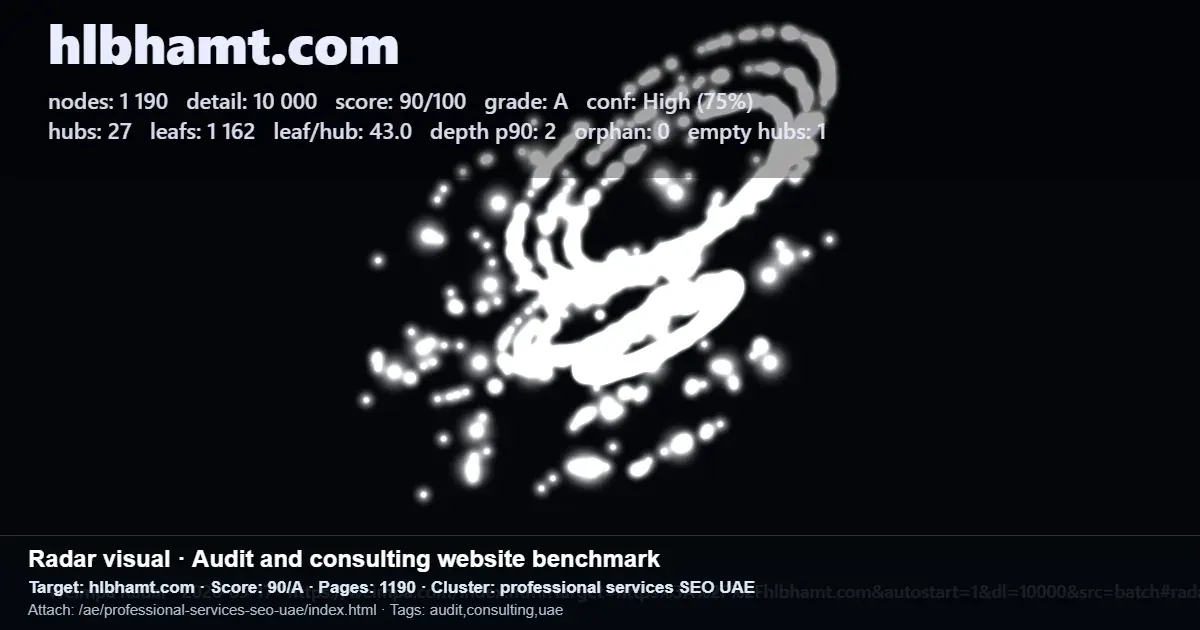
Radar works as a structured scan layer. In the examples available for this topic, it reports scores, grades, page counts, hub and leaf patterns, and cluster context so teams can see what needs review first.
In brief
- Start with a neutral scan of the website’s technical and structural condition before committing to an agency, consultant, or a larger SEO project.
- Review structure signals such as total pages, hubs, leaves, leaf-to-hub ratio, depth, and orphan indicators where they appear in the scan.
- Use the scan as a shareable baseline to compare recommendations, test proposals, and decide which technical issues should be fixed first.
What to do
The process starts with a Radar scan of the target website. The examples linked to this topic show scans that summarise page volume, score, grade, hubs, leaves, leaf-to-hub ratio, depth, and orphan page indicators where available. That gives the team a concrete starting point instead of relying only on opinion.
This type of diagnostic can be used on very different UAE website structures. One example shows propertyfinder.ae with 10,012 pages, 11 hubs, and 10,000 leaves, while another shows spcfz.ae with 775 pages, 4 hubs, and 770 leaves. A technical SEO crawler benchmark example for oncrawl.com shows 861 pages, 17 hubs, and 843 leaves with a score of 83 and grade B.
Once the scan is complete, the next step is prioritisation. Teams can separate structural SEO questions from content work, review architecture patterns more consistently, and use the same crawl view when discussing technical fixes or assessing external recommendations.
What to keep in mind
This approach suits businesses that want an online technical SEO diagnostic before hiring an agency, starting a longer engagement, or checking competing recommendations. It is also useful when internal technical SEO expertise is limited and a neutral first review is needed.
The strongest signals in the available material are structural rather than commercial. The scans show pages, hubs, leaves, scores, grades, depth, and visible crawl patterns, so the diagnostic should be used as an input for review and prioritisation, not as a guarantee of results.
The same workflow can also support agencies and consultants that need a repeatable diagnostic layer for prospects, audits, and reporting. It helps standardise pre-sales website checks and makes structural issues easier to explain in clear, non-technical language.