
Clinic website seo structure audit uae
What this page covers
Clinic website seo structure audit uae
A clinic website SEO structure audit reviews how service, doctor, branch, and location pages are organised so important pages are easier to find through search and site navigation.
For UAE healthcare websites, the focus is usually on page relationships, sitemap quality, internal linking, and blocked or weak entry points rather than broad medical marketing claims or ranking promises.
In brief
- Check whether service, doctor, branch, and location pages are clearly connected through internal links and a logical site structure.
- Review sitemap coverage, indexing signals, click depth, and whether important clinic pages are blocked or difficult to reach.
- Compare your main sections with competitor structures to spot missing hubs or dedicated page types without relying on guesswork.
What to do
A useful clinic website structure audit starts by mapping the main page types on the site and reviewing how they connect. For healthcare websites, this usually includes service pages, doctor profiles, branch pages, and location content to see whether users and search engines can move between them clearly.
The audit can then assess structural signals such as crawl paths, click depth, sitemap coverage, and internal link distribution. This helps reveal sections that exist on the site but are not strongly connected, easy to discover, or consistently represented across the website.
A competitor structure review is also practical. By listing a competitor’s main section URLs or sitemap and comparing them with your own, you can identify topics or page types they cover with dedicated pages that your clinic website may be missing, which helps shape future hubs or leaf pages more deliberately.
What to keep in mind
This type of page is best suited to clinics or healthcare groups that want to diagnose structural issues without making promises about rankings or patient outcomes. It is especially useful when existing SEO reporting does not clearly show architecture problems specific to healthcare websites.
Common issues include service and doctor pages that are hard to discover from search, fragmented or duplicated branch and location information, and internal linking that does not clearly connect services, doctors, and places. These are structural issues, so the review stays focused on navigation, discoverability, and page relationships.
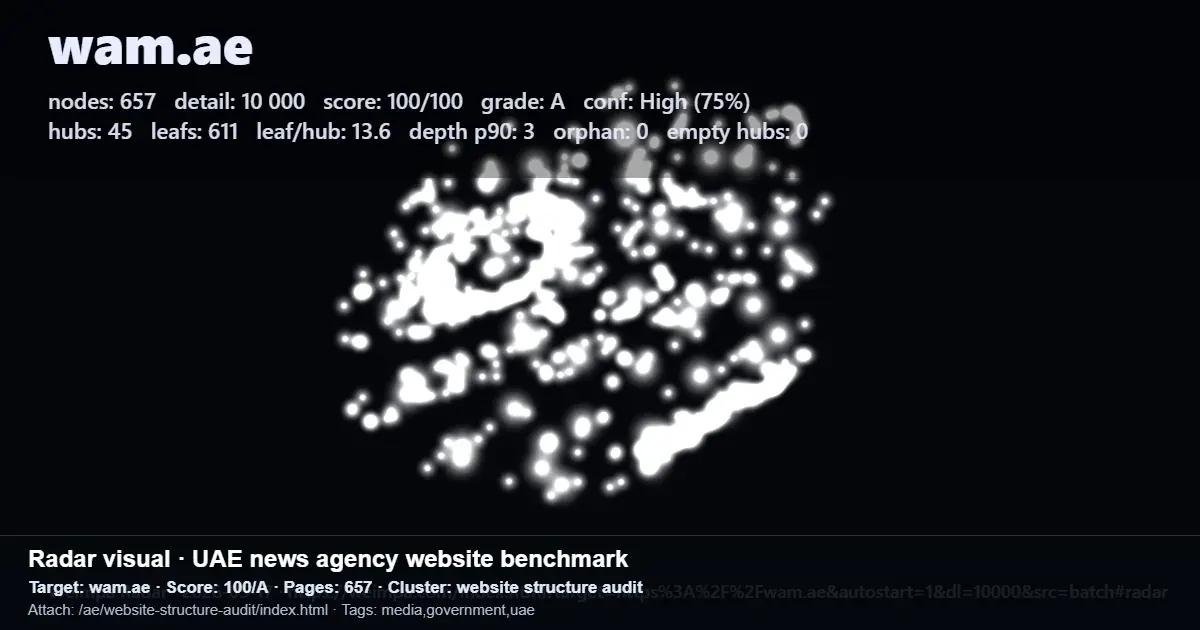
Benchmarks can help frame the findings, but they are not direct predictions for any one clinic website. In the wider UAE website structure audit context, examples range from a small site with 14 pages, 2 hubs, 11 leaf pages, and a score of 25 out of 100 to a large benchmark with 5,893 pages and a score of 100 out of 100, showing how widely site architecture can vary.