
Product or Growth Owner at UAE SaaS Platform
What this page covers
Product or Growth Owner at UAE SaaS Platform
If you own product or growth for a UAE SaaS platform, your website may still be organised around internal product modules while buyers search by problem, role, industry, feature, integration, or use case.
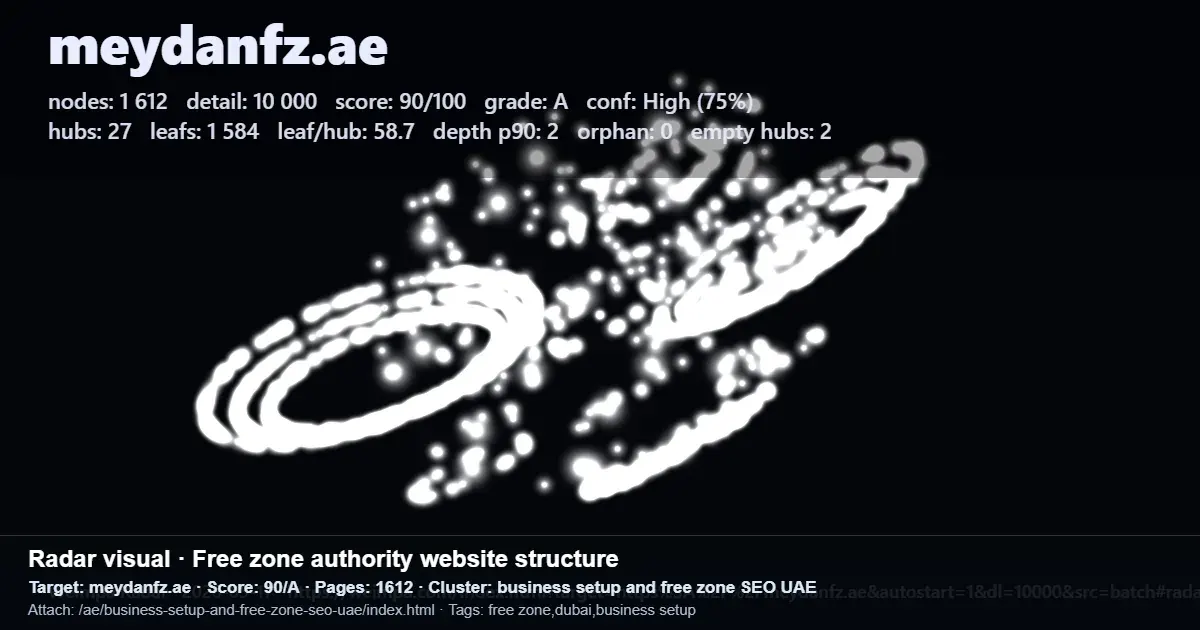
A practical first step is to run Radar, review your current structure against UAE platform benchmarks, and decide which hubs and leaf pages deserve priority before you scale content.
In brief
- You may need a clearer demand map for UAE searches across industries, roles, use cases, features, integrations, and workflows, not just product-module navigation.
- A hub and leaf architecture may fit if you need many specific landing pages without repeating generic SaaS copy across similar topics.
- Before you start, check your current page count, hub depth, leaf coverage, and whether product, marketing, and sales agree on the first priority pages.
What to do
As a product or growth owner, your challenge is practical: your platform can be described in many ways, but the website may not reflect how UAE prospects actually search. Radar helps you review that gap at the structure level before you commit to a larger content build.
The suitable format is a demand and architecture review. It can compare your platform with UAE website benchmarks, identify possible hubs and leaf pages, and plan coverage for features, industries, roles, integrations, workflows, and use cases where a dedicated page has a clear purpose.
Start with a small, structured pass rather than a full rewrite. Review your navigation, page depth, and leaf coverage, then choose a limited set of priority pages that product, marketing, and sales can assess together.
What to keep in mind
Radar benchmark examples for UAE platform and technology sites show very different structures. One fintech platform benchmark lists 27 pages, while an HR platform benchmark lists 848 pages and an IT consulting benchmark lists 1,976 pages.
Those numbers do not mean that more pages will perform better. They are a prompt to inspect architecture, depth, hub-to-leaf balance, and whether your pages match search patterns instead of copying another site’s scale.
This next step makes sense if your team needs a shared view of demand and page priorities. It may be less useful if you only need one campaign landing page, or if your product, market, and target use cases are not yet defined.