
Website Builder or No-code Platform Partner in UAE
What this page covers
Website Builder or No-code Platform Partner in UAE
If you build websites or run a no-code platform in the UAE, your customers can launch fast but may still need a clearer path for organic visibility, site structure, and GEO-ready page growth.
A practical first step is to offer a Radar scan after launch: map the public URL structure, review hubs and leaf pages, and decide what guidance fits the customer’s site.
In brief
- You may need a simple post-launch step that helps customers see why a live site still needs structure, internal links, and page-layer planning.
- A good starting format may be a Radar scan with UAE-relevant guidance on hubs, leaf pages, depth, and visible URL coverage before larger SEO or GEO work begins.
- Before you start, check that the site is public. Radar does not bypass protected or blocked sites, does not add AI interpretation, and coverage depends on public sitemaps and shallow crawl signals.
What to do
For a website builder or no-code platform partner, the challenge is practical. Customers can create and publish sites quickly, but basic SEO checklists may not cover structure, hubs, leaf pages, internal linking, or GEO visibility well enough.
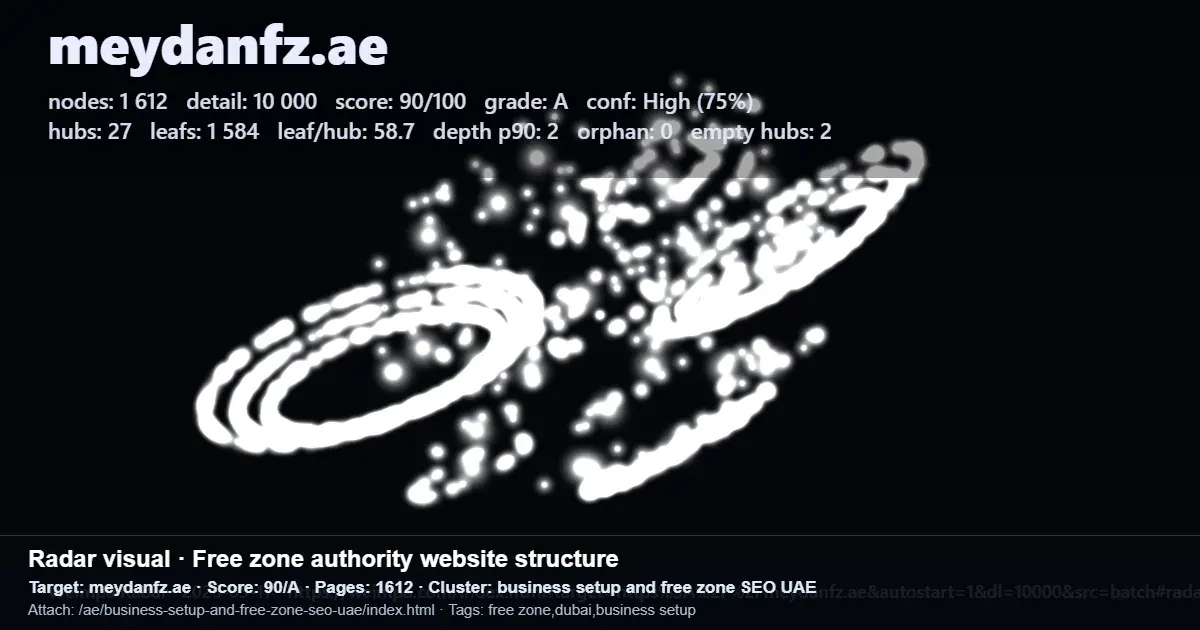
Radar can work as a recommended next step after a site goes live. It maps URL structure for up to 1,000 pages per run and shows page counts, hubs, leaves, depth, and related structure signals that can guide the next customer conversation.
Start with one public customer site or a representative template flow. Use the scan to see what Radar can and cannot observe, then decide whether the output is useful for support, onboarding, or an upgrade path for advanced users.
What to keep in mind
Radar is a structure scan, not a guarantee of rankings, traffic, or AI search coverage. It can make the current URL layer easier to discuss, but content, positioning, and implementation still need careful review.
The scan has clear limits. It does not bypass blocked or protected websites, does not provide AI interpretation, and its coverage depends on public sitemaps and shallow crawl signals. Very complex or hidden architectures may need additional review.
This is a reasonable next step when you want a lightweight, UAE-relevant way to show customers what exists after launch: how many pages are visible, how hubs and leaf pages appear, and where a more structured growth path may be needed.