
Search-Layer Build Cost Factors for UAE Websites
What this page covers
Search-Layer Build Cost Factors for UAE Websites
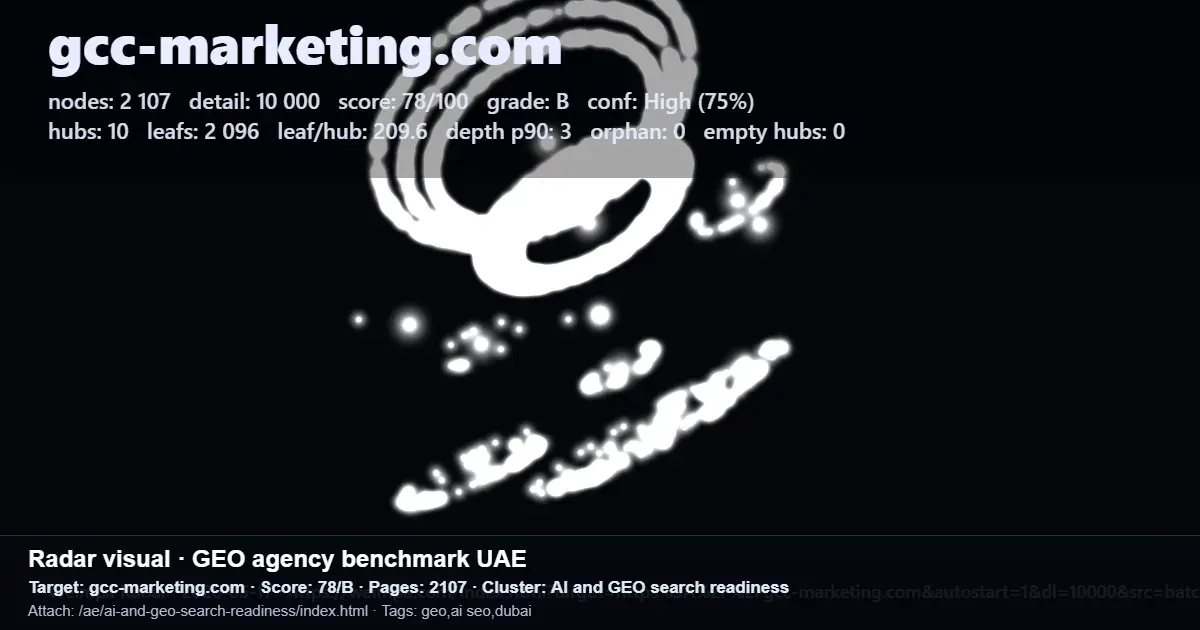
Build effort often depends on how clearly a website exposes its structure. Radar checks robots.txt for sitemap links, reads the sitemap URLs it finds, and builds a site graph from that data.
If sitemap discovery does not work, the review falls back to a shallow crawl, and fair use limits apply. That can change scope because important structural signals may be missing or only partly visible.
In brief
- A complete, easy-to-find sitemap setup can reduce extra diagnostic work because the site can be mapped directly from sitemap URLs.
- If a sitemap covers only part of the website, publishing a complete sitemap index is often the first fix before broader search-layer planning.
- When sitemap discovery fails, analysis depends on a shallow crawl instead, so effort is shaped more by how accessible the site structure is.
What to do
A practical starting point for estimating search-layer build effort is sitemap discovery. Radar looks for sitemap references in robots.txt, reads the sitemap URLs it finds, and builds a site graph from that structure. When that path works cleanly, the website is faster to assess.
A common structural issue is incomplete sitemap coverage. If the sitemap includes only a subset of pages, the usual fix is to publish a complete sitemap index. That matters because partial structure signals can create extra diagnostic work before teams can rely on the graph.
If the sitemap path is not available, the review falls back to a shallow crawl with fair use limits. In that case, build effort depends more on how well the site exposes pages and relationships through crawlable surfaces instead of clear sitemap signals.
What to keep in mind
This matters most for websites that need structural diagnostics rather than a one-off surface check. Repeat reviews can help track how indexing, the page graph, and overall search-layer health change as the site evolves.
It is also useful when teams want earlier visibility into sitemap issues, robots rules, or other crawl access changes. A recurring diagnostic view makes it easier to spot new structural problems before they spread.
For organisations managing several websites, effort can rise when sitemap setups are fragmented or structural patterns vary across properties. In those cases, comparing site structures can help show where search-layer improvements should start first.