
Website graph weak spots checklist for UAE teams
What this page covers
Website graph weak spots checklist for UAE teams
Use this checklist to find weak spots in a UAE website graph before they become bigger discovery problems. Focus on visible pages, hubs, leaves, entry points, and blocked paths.
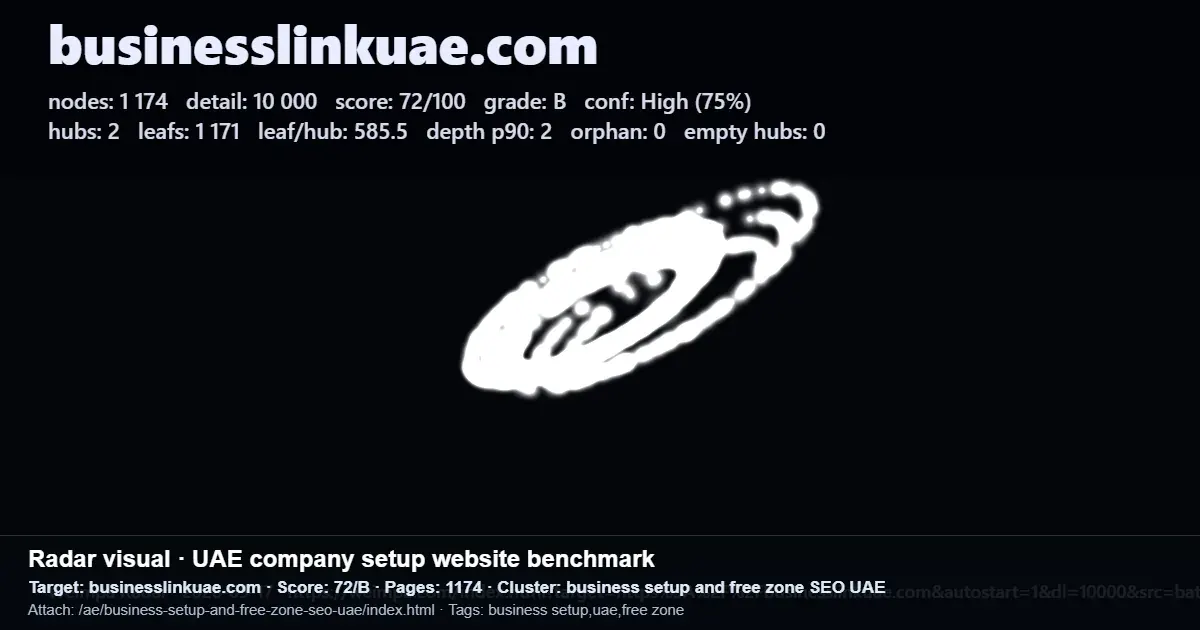
Radar scans a public website structure and shows pages, hubs, leaves, weak spots, sitemap, robots and home access checks, plus a readiness score and practical next steps.
In brief
- Start by checking whether important public pages are visible, reachable, and connected to the hubs that explain their role in the website graph.
- Review the balance between hubs and leaves. UAE benchmarks vary widely, from 657 pages and 45 hubs to 14 pages and 3 hubs.
- Prioritise weak entry pages, limited hub coverage, sitemap or robots access issues, and pages that are poorly connected inside the site structure.
What to do
A practical weak spots checklist starts with the public website graph. Review the pages Radar can see, then separate hubs from leaves so your team can understand whether the site has a clear search layer or only a small set of disconnected pages.
Next, assess search entry points. Pages that should support organic discovery need a clear role in the structure, relevant internal links, and enough connection to hubs so Google and AI-powered search can understand how the site is organised.
After the scan, turn the findings into a focused action list. Fix blocked discovery paths, improve weak landing pages, add missing hub or leaf pages where demand is mapped, and support the structure with internal linking, sitemap submission, and monitoring.
What to keep in mind
This checklist is useful for UAE companies, marketers, SEO teams, agencies, B2B directories, and digital platforms that need a quick diagnostic layer for website structure and search visibility planning.
Radar benchmarks show how different website graphs can be. One UAE news agency benchmark showed 657 pages, 45 hubs, 611 leaves, depth p90 of 3, and a 100/A score. An aviation logistics benchmark showed 14 pages, 3 hubs, 10 leaves, depth p90 of 4, and a 17/F score.
The scan is a structural diagnostic, not a ranking guarantee. It helps show what is visible, where discovery may be blocked, and what to fix first before deeper demand mapping, hub and leaf planning, page production, deployment, and monitoring.