
Search-layer buyer guide for UAE B2B service websites
What this page covers
Search-layer buyer guide for UAE B2B service websites
For UAE B2B service websites, a good search-layer buying decision starts with a simple question: can Google and AI-powered search clearly find your key pages, hubs, and supporting leaf content?
Before spending more on content or monthly SEO work, check whether the site structure, sitemap, and visible entry points make the website easy to discover and understand.
In brief
- Start with sitemap-based discovery, then use crawl fallback only if the sitemap is missing, incomplete, or unreliable.
- If the sitemap covers only part of the site, publish a full sitemap index so search engines can find the complete page set more clearly.
- Use the diagnosis to tell whether the main issue is site structure, weak hub and leaf coverage, blocked discovery, or missing search demand coverage.
What to do
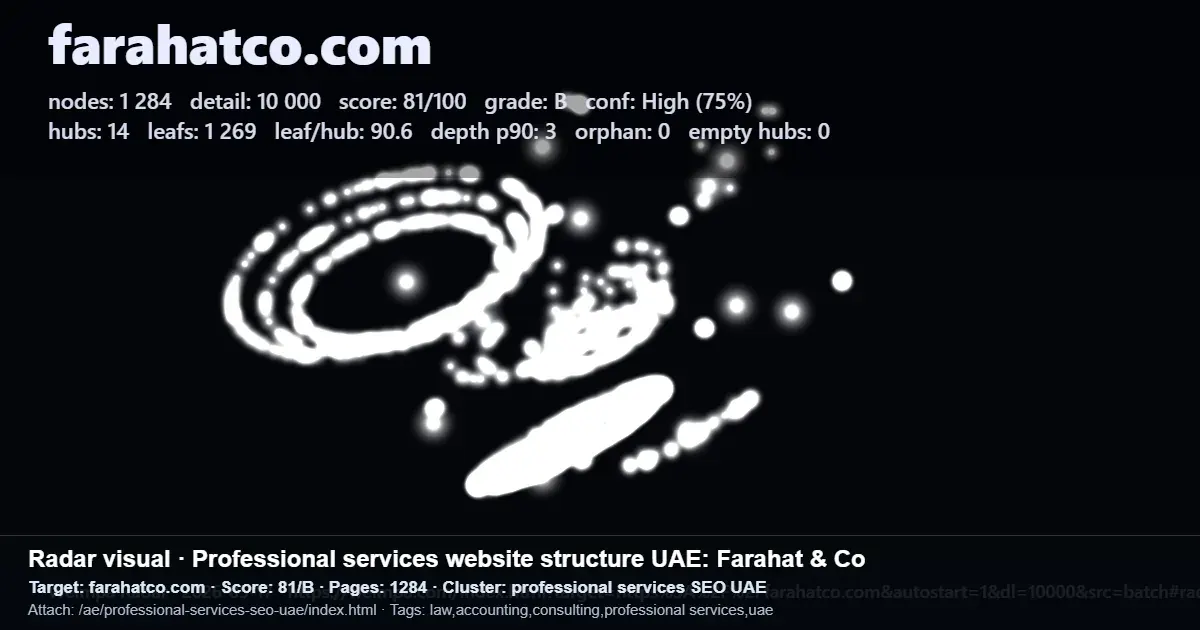
A practical buying process for a UAE B2B service website should begin with diagnosis, not assumptions. Radar is a free public website scan that checks structure, visible pages and hubs, weak spots, sitemap and robots signals, and what to fix first.
If the scan shows a structural gap, the next step is to build the missing search layer instead of adding disconnected pages. The 1000&1 Pages workflow covers demand mapping, hub and leaf planning, evidence-backed page creation, internal linking, deployment, sitemap submission, and growth monitoring.
This matters because discovery issues often appear before content quality is even assessed. A sitemap-first approach, with crawl fallback when needed, helps show whether search engines are seeing the right pages. If the sitemap exposes only part of the site, the practical fix is to publish a complete sitemap index.
What to keep in mind
This page is most useful for UAE companies, marketers, SEO teams, agencies, and digital platforms that want to understand how Google and AI-powered search see their websites. The UAE focus includes B2B services across Dubai, Abu Dhabi, Sharjah, and free zones.
It is especially relevant when a team cannot tell whether weak inbound lead flow comes from technical SEO issues, content gaps, or weak website architecture. It also helps when decision-makers want a clear, non-technical diagnosis before committing budget to retainers or more content production.
The value here is practical visibility, not broad promises. If the website is already live but search visibility remains unclear, this page helps frame the next checks around blocked discovery, incomplete sitemap coverage, weak entry points, and the structural fixes to make first.